


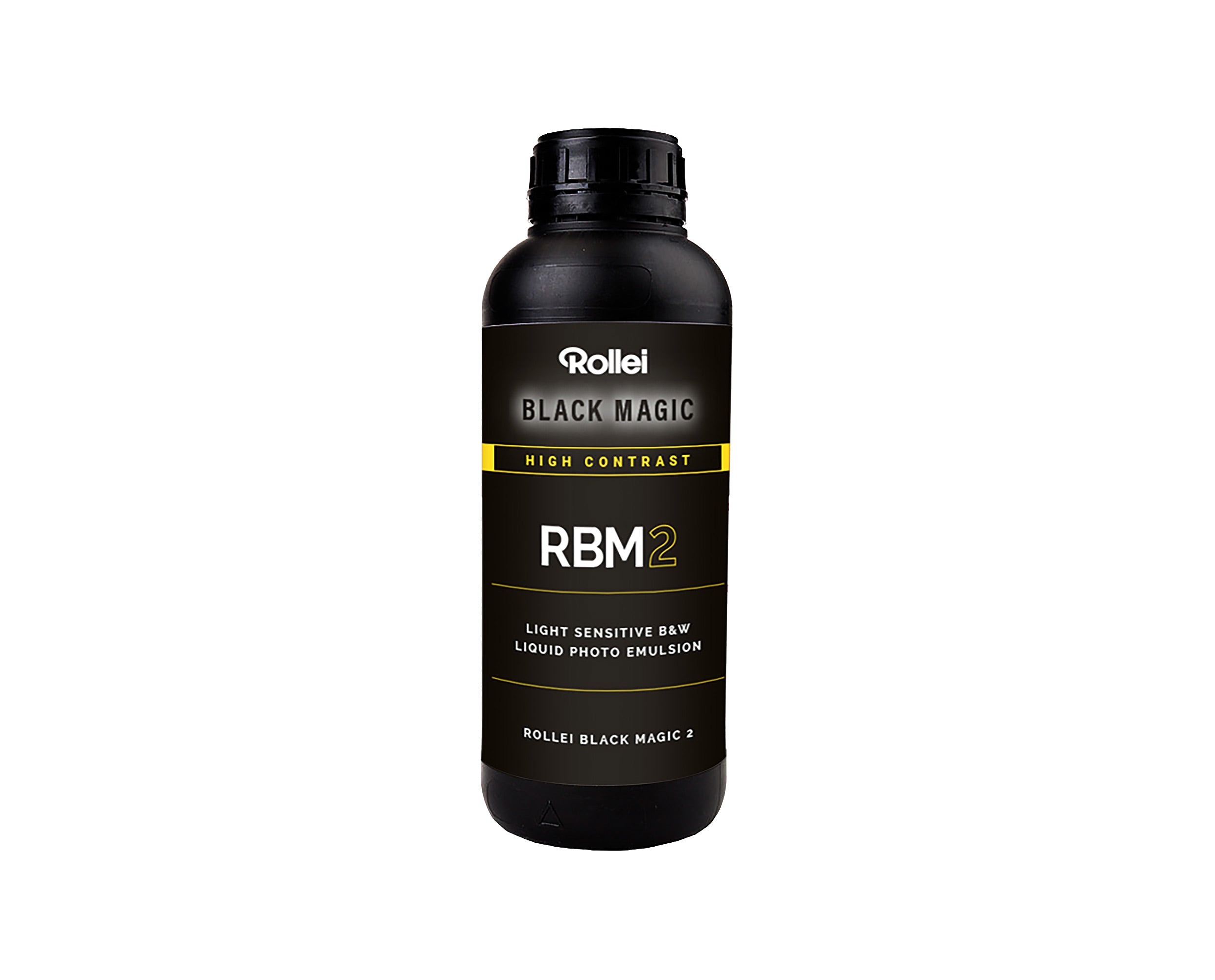
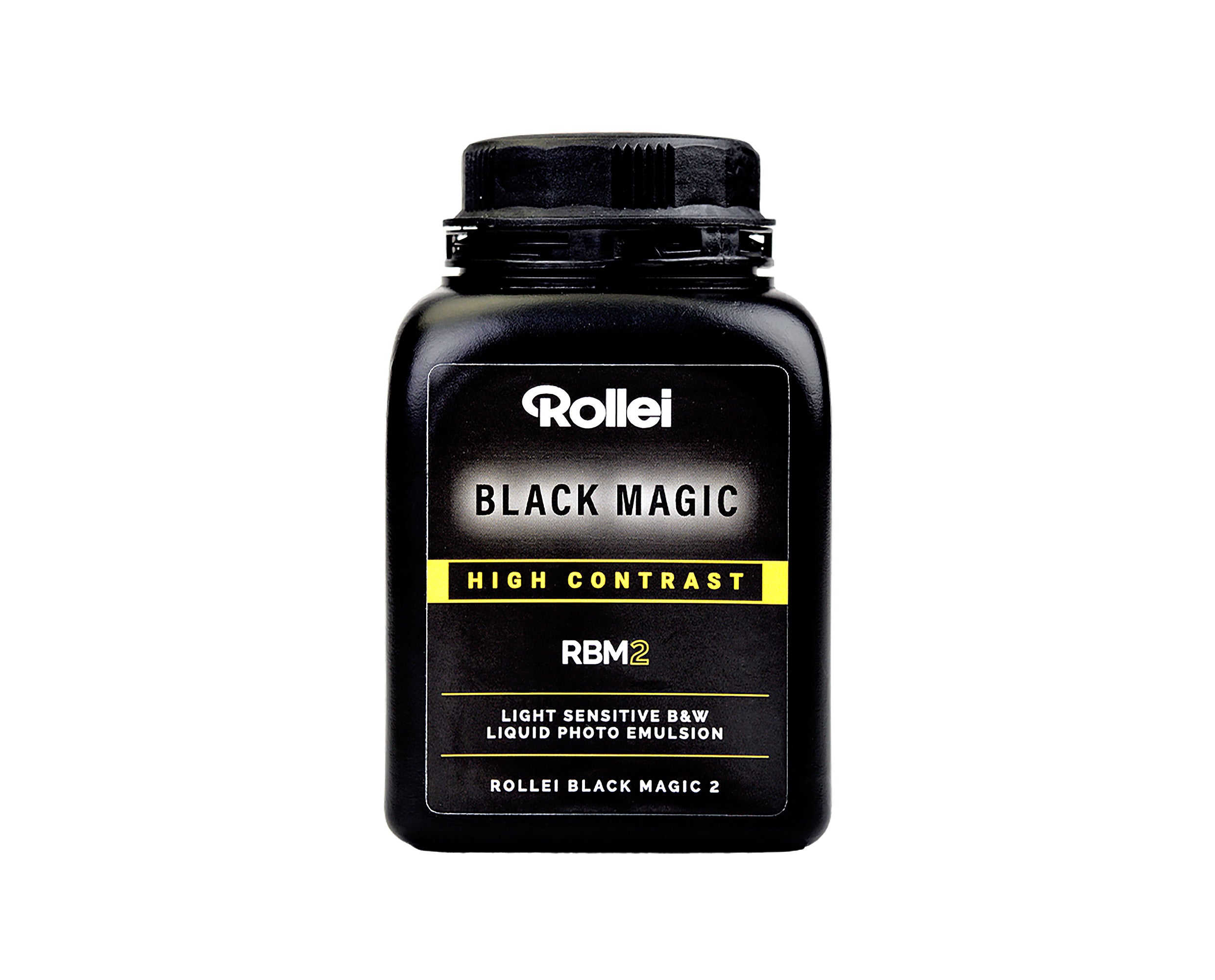
Rollei Black Magic photo emulsion grade normal 300ml
Legal Guarantee
Statutory legal guarantee applies.
More information
Rollei Black Magic Photo Emulsion – Normal Grade
Rollei Black Magic is a high-quality black-and-white photo emulsion based on silver gelatin, designed for the individual coating of photographic surfaces. It can be applied to a wide range of materials – such as paper, canvas, glass, wood, metal, ceramics, or textiles – offering broad creative potential for experimental or alternative photographic processes.
The normal grade version corresponds approximately to grade 2 of traditional fiber-based photographic paper. It is ideal for rendering images with strong yet balanced contrast and a smooth tonal range.
Processing:
Before use, the emulsion should be gently heated in a water bath to approx. 35°C (95°F) and then evenly applied to the desired substrate using a brush, roller, or coating blade. Once completely dry, the coated material can be exposed and processed like traditional black-and-white photo paper – using standard black-and-white chemistry for development, fixing, and washing.
Note on light sensitivity:
This light-sensitive emulsion reacts significantly slower than photographic film – its practical sensitivity is approximately ISO 1 to 3. For beginners, this means: longer exposure times are not unusual but rather beneficial, allowing for sensitive control over the exposure process. In strong lighting, large-format projections, or artistic work on unusual substrates, the low sensitivity proves advantageous, enabling precise image rendering without overexposure. A short test series is recommended to determine proper exposure.
Key Features:
- Black-and-white photo emulsion based on silver gelatin
- Normal grade (approx. equivalent to contrast grade 2)
- Suitable for coating paper, glass, canvas, wood, metal, ceramics, etc.
- Application via brush, coating blade, or pouring technique
- Compatible with standard black-and-white chemistry
- Warm to approx. 35°C before use
- Yield depends on surface and coating thickness
- Exposure under enlarger or via contact printing
- Sensitivity approx. ISO 1–3 (depending on substrate and processing)
Available sizes:
- 300ml – ideal for testing, small runs, and workshops
- 1000ml – suitable for larger projects or repeated use
Pairs well with
Rollei Black Magic photo emulsion grade normal 300ml
If you have any questions, we're happy to assist you!
You can contact us anytime – we usually reply within 1–2 business days.
-
Customer Service
Not sure about a product or have a specific question?
Just send us an email at hello@rolleianalog.com – we’re happy to help.
Or give us a call at +49 (0)40 23700 888 (Mon–Fri, 9:00 AM – 4:00 PM CET). -
Shipping Information
Shipping costs are calculated live in your cart based on your delivery address and selected shipping method.
For full details on delivery times, carriers, and international shipping, please refer to our Shipping Information page. -
International Shipping
We ship worldwide! If you're ordering from abroad and have questions about delivery, customs, or returns – feel free to get in touch with us.
FAQs
What do I need to develop black-and-white film?
For classic black-and-white film development, you need three baths:
Developer – makes the exposed image visible
Stop bath – stops the development process
Fixer – stabilizes the image and makes it light-resistant
With the Rollei Film Chemistry Kit, you get all three components in one perfectly matched set:
- Rollei RSG = developer
- Rollei RCS = stop bath (citrate-based, low odor)
- Rollei RXA = universal fixer
A compact solution for everyone who wants to develop black-and-white film at home – easy to use and precise in results.
Which chemistry is suitable for color film?
Color films require special development processes. For color negative film, this is the C-41 process.
The Rollei Colorchem C-41 Kit contains all essential components – color developer, bleach-fix (blix), and stabilizer – precisely balanced for safe processing at 38 °C. It delivers color-accurate negatives with fine grain and good longevity.
Note: Slide films (reversal films) require a different process – the E-6 process, which is more complex and not compatible with C-41.
How long do photo chemicals last?
It depends on the type of chemical, how it’s stored, and whether it’s been opened:
- Unopened concentrates: usually last 1–2 years if kept in a cool, dark place
- Opened concentrates: can last a few weeks to several months, depending on air exposure and storage
- Mixed working solutions: are typically good for a few days to a few weeks
Pro tip: If it smells off, changes color, or shows sediment – it’s probably time to toss it. For maximum shelf life, always store your chemicals airtight, cool, and away from light.
Can I reuse photo chemistry?
Yes, many photo chemicals can be reused – especially fixers, stop baths, and some developers.
The exact number of uses depends on the type of product, dilution, and volume of material processed.
Fixers can even be regenerated – for example, by adding fresh concentrate or a dedicated replenisher.
This is especially worthwhile if you're processing frequently and want to maintain consistent performance over time.
With developers, regeneration is more difficult: many are sensitive to oxidation and lose activity with each use.
A simple top-up usually isn’t enough – fresh working solutions are generally the more reliable choice.
Stop baths are typically replaced once the pH level shifts (e.g., when a color indicator changes, as in citrate-based stops).
Pro tip: If you process regularly, it’s helpful to track your usage (e.g., number of rolls or prints) to know when to refresh or regenerate your chemistry.
How do I properly dispose of used photo chemicals?
Photo chemicals should never be poured down the drain or thrown in the trash!
They contain substances that can harm the environment – especially fixer, which may contain residual silver. Used chemistry should be taken to a hazardous waste collection site or local recycling center. In some regions, labs or photo retailers also offer disposal services.
Pro tip: For small quantities, collect the chemicals in tightly sealed and clearly labeled containers and dispose of them all at once. Always follow your local regulations for disposing of photographic and lab chemicals.